
Technology is enabling conservation scientists to collect and analyze data with an efficiency unimagined just decades ago. Satellite and drone-based remote sensing allow rapid mapping and monitoring of environmental conditions; networked sensors such as camera traps and flow meters provide real-time data about the health and potential threats to important resources.
Data are fundamental to making science-based conservation decisions. By modernizing environmental data capture and analysis and streamlining the delivery of usable information to decision makers, we can unlock new opportunities for transformative change in resource management.
The Conservancy’s team of designers, engineers, and data scientists are continually applying new applications of technology to increase the pace and scale of conservation in California – and beyond.
Science in Action
Terrestrial | Planning | Technology
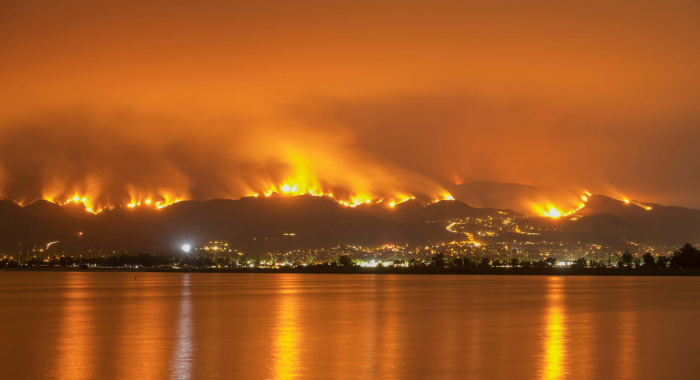
Wildfire and Communities
How can land protection and restoration help protect communities from wildfire?
Terrestrial | Marine | Science
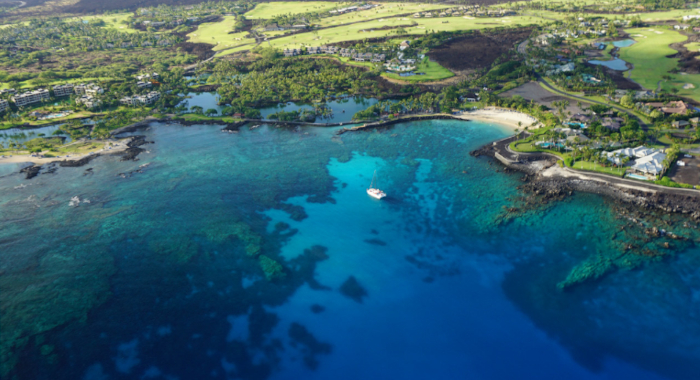
TNC and FEMA
How do we increase climate resilience in ways that work for people and nature?
Products
2015 | Freshwater | Terrestrial | Marine | Planning | Science | Publications & Reports
Recommendations for improving recovery criteria under the US Endangered Species Act
Doak, D.F., G.K. Himes Boor, V.J. Bakker, W.F. Morris, A. Louthan, S.A. Morrison, A. Stanley, L. Crowder
One of the key components of a recovery plan for a threatened or endangered species in the United States is the set of recovery criteria that will be used to evaluate progress in abating the threats…
2015 | Terrestrial | Maps & Webmaps
Conservation Legacy in Marin County, California
Katie Andrews, Megan Webb, Robin Cox
This interactive webmap takes a multimedia approach to showcase the Conservancy’s conservation legacy in Marin County, California. Eleven achievements are profiled with photographs and…
2015 | Terrestrial | Science | Publications & Reports
Floral visitation by the Argentine ant reduces bee visitation and plant seed set
Cause Hanna, Ida Naughton, Christina Boser, Ruben Alarcón, Keng-Lou, James Hung, David Holway
Floral visitation by ants can compromise plant reproduction in situations where ants interfere with more effective pollinators. This paper documents how Argentine ants on Santa Cruz Island in…
2014 | Terrestrial | Science | Blogs
Can We Grow Safe Produce and Conserve Nature at the Same Time?
Daniel Karp, Sasha Gennet, Rodd Kelsey
2014 | Freshwater | Terrestrial | Marine | Planning | Science | Publications & Reports
A framework for conservation in a human-dominated world
Recognition of the magnitude of human impacts on the planet and the urgent need to increase the pace and scale of conservation has led many conservation organizations to emphasize conservation for…
2014 | Terrestrial | Planning | Publications & Reports
Modeling residential development in California from 2000 to 2050: Integrating wildfire risk, wildland and agricultural encroachment
M.L. Mann, P. Berck, M.A. Moritz, E. Batllori, J.G. Baldwin, C.K. Gately, D.R. Cameron
Between 1940 and 2000, nearly 10 million housing units were constructed in California. This new development led to increased interaction between human and natural communities. Tha authors of this…
2014 | Terrestrial | Publications & Reports
Incorporating critical elements of city distinctiveness into urban biodiversity conservation
Strategies for preserving the Earth’s biodiversity that can be employed within cities are likely to become more common as urban areas continue to increase in size and number. Progress towards…
2014 | Freshwater | Marine | Planning | Publications & Reports
An Inventory and Classification of U.S. West Coast Estuaries
Walter N. Heady, Kevin O'Connor, Jennifer Kassakian , Kate Doiron, Charles Endris, Daniel Hudgens, Ross P. Clark , Jena Carter , Mary G. Gleason
Estuaries are some of the most productive ecosystems on the planet. This inventory classifies more than 600 coastal confluences on the West Coast of the United States. Each estuary was classified…
2014 | Freshwater | Marine | Science | Publications & Reports
Nursery Functions of U.S. West Coast Estuaries: The State of Knowledge for Juveniles of Focal Invertebrate and Fish Species
Brent B. Hughes, Matthew D. Levey, Jennifer A. Brown, Monique C. Fountain, Aaron B. Carlisle, Steven Y. Litvin, Correigh M. Greene, Walter N. Heady, Mary G. Gleason
Estuaries support significant biodiversity and important ecosystem functions such as providing rearing habitat for juvenile fish and invertebrates. This report synthesizes the scientific…
2014 | Terrestrial | Planning | Blogs
New Study: Where Have All The Rangelands Gone?
Matt Miller, Dick Cameron
2014 | Terrestrial | Science | Publications & Reports
Fractured genetic connectivity threatens a southern California puma (Puma concolor) population
H.B. Ernest, T.W. Vickers, S.A. Morrison, M.R. Buchalski, W.M. Boyce
Highly fragmented landscapes can pose myriad threats to wide-ranging species like mountain lions. Coastal southern California has long been the focus of research into demographics, genetics, and…
2014 | Terrestrial | Technology | Science | Publications & Reports
A multi-scale distribution model for non-equilibrium populations suggests resource limitation in an endangered rodent
Tim Bean, Bob Stafford, Scott Butterfield, Justin Brashares
This paper presents a multi-step approach to estimate the realized and potential distribution of the endangered giant kangaroo rat. The authors estimate the potential distribution by modeling…
2014 | Freshwater | Science | Publications & Reports
Low-Cost Restoration Techniques for Rapidly Increasing Wood Cover in Coastal Coho Salmon Streams
Jennifer K. Carah, Christopher C. Blencowe, David W. Wright
Coho salmon in California are critically imperiled so there is strong impetus to achieve as much habitat restoration as possible in priority watersheds quickly and with limited resources. This paper…
2014 | Terrestrial | Science | Publications & Reports
Passive recovery of vegetation after herbivore eradication on Santa Cruz Island, California
Beltran, R.S., N. Kreidler, D.H. Van Vuren, S.A. Morrison, E.S. Zavaleta, K. Newton, B.R. Tershy, D.A. Croll
Introduced predators and herbivores can have dramatic ecological effects on island ecosystems; their eradication can produce similarly profound ecological responses. This paper analyzes data from…
2014 | Freshwater | Terrestrial | Technology | Science | Blogs
A Renter’s Market: BirdReturns Offers Innovative Conservation
Eric Hallstein, Matt Miller
2014 | Terrestrial | Maps & Webmaps
California Rangeland Conversion webmap
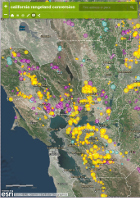
This webmap shows regions of California converted from rangeland land use to development, intensive agriculture, or other miscellaneous land uses between 1984 and 2008. See related publication…
2014 | Terrestrial | Planning | Publications & Reports
Whither the Rangeland?: Protection and Conversion of California’s Rangeland Ecosystems
Cameron DR, Marty J, Holland RF
This study assesses the amount of rangeland conversion between 1984 and 2008 in California. The researchers analyzed data from the California Farmland Mapping and Monitoring Program to see where…
2014 | Terrestrial | Science | Publications & Reports
Ecological change on California's Channel Islands from the Pleistocene to the Anthropocene
Rick, T.C, T.S. Sillett, C.K. Ghalambor, C.A. Hofman, K. Ralls, R.S. Anderson, C.L. Boser, T.J. Braje, D.R. Cayan, R.T. Chesser, P.W. Collins, J.M. Erlandson, K.R. Faulkner, R. Fleischer, W.C. Funk, R. Galipeau, A. Huston, J. King, L. Laughrin, J. Maldonado, K. McEachern, D.R. Muhs, S.D. Newsome, L. Reeder-Myers, C. Still, S.A. Morrison
Understanding the deep history of places and resources, and the interplay between natural and cultural histories, can be critical to science-based conservation management. This paper explores the case…
2014 | Terrestrial | Planning | Publications & Reports
Demography linked to climate change projections in an ecoregional case study
B. C. Mclaughlin, C. N. Morozumi, J. MacKenzie, A. Cole, S. Gennet
Anticipating how species will move as the climate changes is a fundamental concern in 21st century conservation. This study modeled potential responses of blue oak (Quercus douglasii), an…