California is one of the most hydrologically altered landscapes in the world. As water becomes ever more scarce and the human population continues to grow, that vast engineered system strains to meet the needs of people let alone the needs of nature.
Water rights allocations far exceed actual surface water supply, and millions of wells tap groundwater to meet the increasing demands of farms and communities. As groundwater reservoirs are depleted they can in turn reduce surface flows – exacerbating a vicious cycle in which people and nature both lose. Rivers, wetlands and groundwater-dependent ecosystems are caught in this struggle for an increasingly limited resource. Nearly half of California’s roughly 4,000 freshwater species are considered vulnerable to extinction. Of the taxa that are found nowhere but California – our endemic freshwater biodiversity – 90 percent are at risk.
But there is hope. While it is impossible to return natural flows to most of California’s rivers and streams, we can – through science, technology, and innovative market tools – endeavor to deliver water when and where nature needs it most.
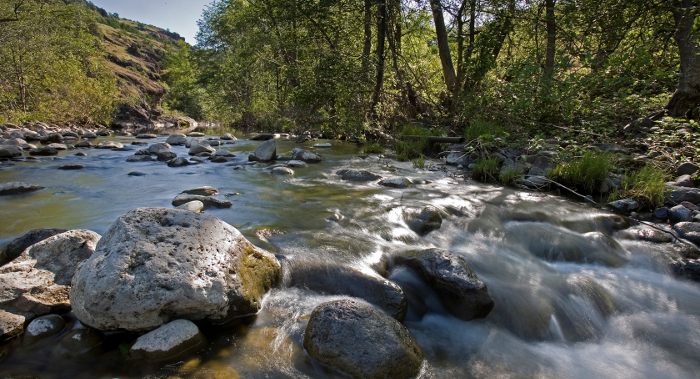
Freshwater Systems
California is one of the most hydrologically altered landscapes in the world. As water becomes…>>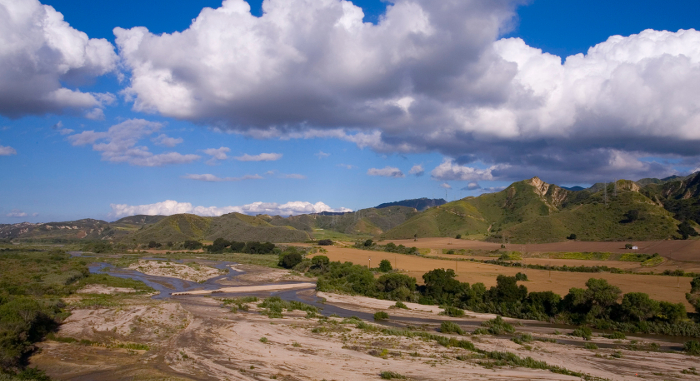
Groundwater
In a normal year, groundwater accounts for 40 percent of California’s water supply. That…>>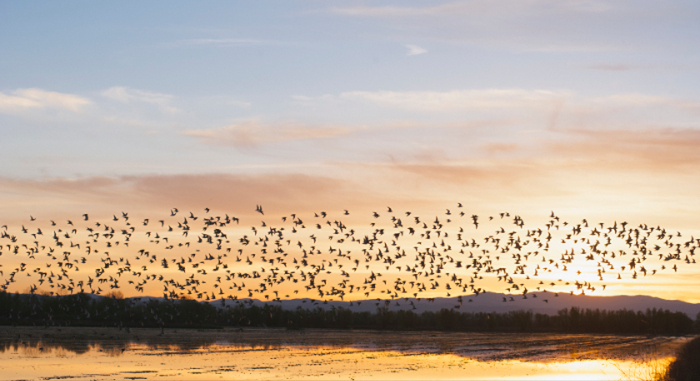
Surface Flows
Californians have fundamentally altered many of the state’s rivers and streams with dams,…>>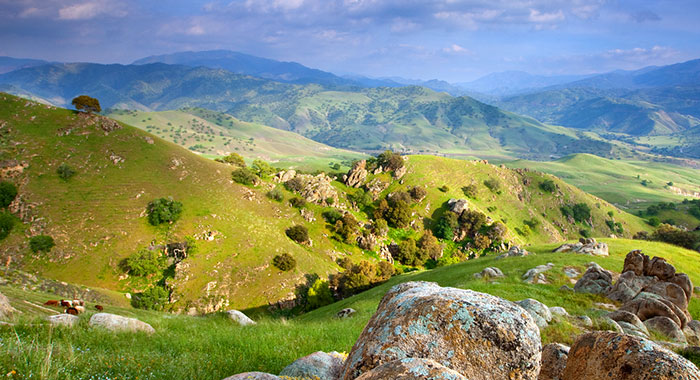
Terrestrial Systems
In California, a day’s drive can take a visitor from record-setting desert heat to glaciated…>>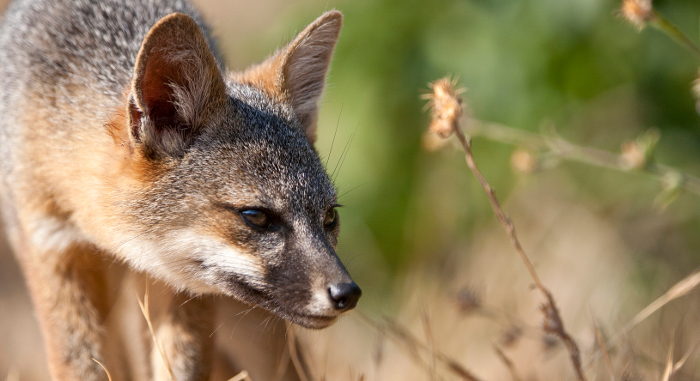
Wildlands
Nearly half of California is protected in some land status that prevents most kinds of intensive…>>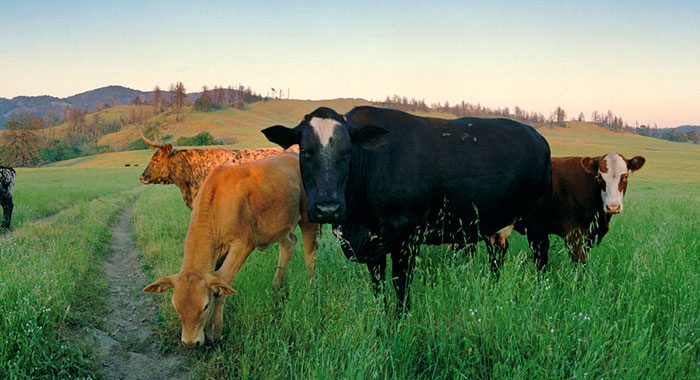
Harvested Landscapes
A third of California is privately-owned forestland, woodland or grassland. From redwood forests on…>>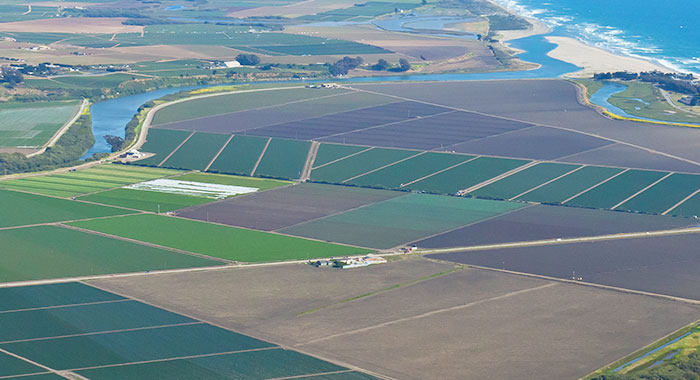
Cultivated Landscapes
California is the leading agricultural state in the country and it’s agriculture generates…>>
Urban Areas and Infrastructure
With California’s population on track to reach 50 million people, the demand for energy,…>>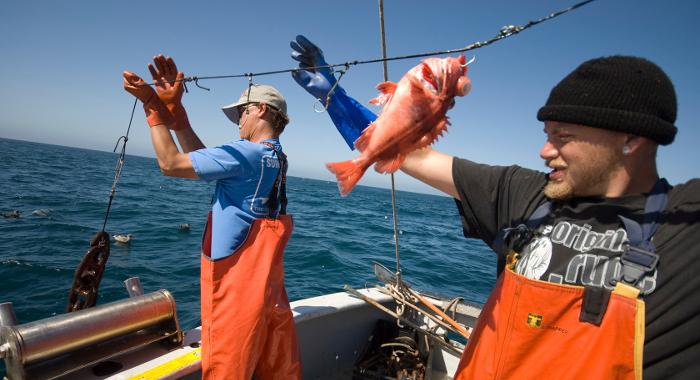
Fisheries
Wild capture fisheries supply food and jobs for hundreds of millions of people across the globe. Yet…>>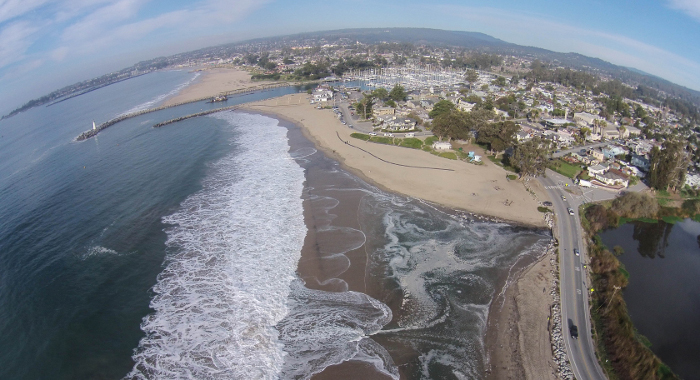
Coastal Conservation
Almost half of the world’s human population lives in coastal areas, and associated coastal…>>Science in Action
Terrestrial | Planning | Technology
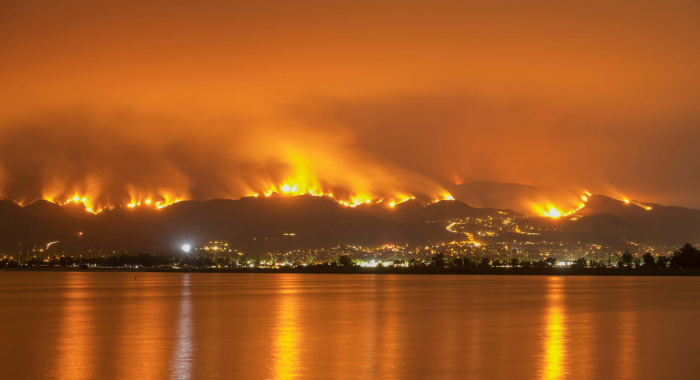
Wildfire and Communities
How can land protection and restoration help protect communities from wildfire?

Terrestrial | Marine | Science
TNC and FEMA
How do we increase climate resilience in ways that work for people and nature?

2011 | Terrestrial | Technology | Publications & Reports
The use of airborne laser scanning to develop a pixel-based stratification for a verified carbon offset project
Jordan Golinkoff, Mark Hanus, Jennifer Carah
The voluntary carbon market is a new and growing market that is increasingly important to consider in managing forestland. Monitoring, reporting, and verifying carbon stocks and fluxes at a project…
2011 | Terrestrial | Planning | Science | Publications & Reports
Trophic considerations in eradicating multiple pests
Invasive species can have profound effects on island ecosystems. So, too, can their removal. And interactions among species can both help and hinder the attainment of restoration goals. This paper…
2011 | Terrestrial | Science | Publications & Reports
Surveillance for West Nile virus and vaccination of free-ranging island scrub-jays (Aphelocoma insularis) on Santa Cruz Island, California
Walter M. Boyce, Winston Vickers, Scott A. Morrison, Scott Sillett, Luke Caldwell, Sarah S. Wheeler, Christopher M. Barker, Robert Cummings, William K. Reisen
As West Nile virus invaded the mainland southern California coast in 2003 there were widespread die-offs of certain species of bird. Corvids (e.g., jays, ravens, crows) were especially susceptible.…
2011 | Terrestrial | Science | Publications & Reports
Efficacy of three vaccines in protecting Western scrub-jays (Aphelocoma californica) from experimental infection with West Nile virus: implications for vaccination of Island scrub-jays (Aphelocoma insularis)
Sarah S. Wheeler, Stanley Langevin, Leslie Woods, Brian D. Carroll, Winston Vickers, Scott A. Morrison, Gwong-Jen J. Chang, William K. Reisen, Walter M. Boyce
Concerns about the spread of West Nile virus in North America and the high mortality it causes in corvids have led managers to consider vaccination as a strategy to proactively protect free-ranging…
2011 | Freshwater | Marine | Planning | Publications & Reports
SalmonScape: Priorities for Conserving California’s Salmon and Steelhead Diversity
This report analyzed Chinook, coho salmon, and steelhead trout population and habitat data across California to identify a portfolio of places called the SalmonScape. SalmonScape identifies areas…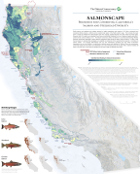
2011 | Freshwater | Marine | Planning | Maps & Webmaps
SalmonScape map
The Conservancy's SalmonScape is an analysis and map that analyzed and ranked the watersheds that support or contribute to salmon habitat in California based on where conservation efforts…
2011 | Terrestrial | Science | Publications & Reports
Landscape-scale indicators of biodiversity's vulnerability to climate change
Klausmeyer, K. R., M. R. Shaw, J.B. MacKenzie, D.R.Cameron
This analysis provides an approach for distilling complex climate and landscape data into actions land managers can take to help plants and animals adapt to a changing climate. Based on historical…
2011 | Terrestrial | Planning | Science | Publications & Reports
The essential non-science of eradication programmes: creating conditions for success
SA Morrison, KR Faulkner, LA Vermeer, L Lozier, MR Shaw
Eradication programs are complex undertakings that require comprehensive multidisciplinary planning and nimble adaptive implementation. This paper discusses the preparation that went into the most…
2011 | Terrestrial | Planning | Science | Publications & Reports
Increasing the return on investments in island restoration
A Saunders, JP Parkes, A Aguirre-Munoz, SA Morrison
Tremendous advances over recent decades in eradication of invasive species on islands raise the question whether there are now opportunities to further increase the pace and scale of that work. This…
2011 | Terrestrial | Planning | Publications & Reports
Northern Sierra Partnership Climate Adaptation Assessment
Cameron, D., K. Klausmeyer, J. Mackenzie, G. Low, L. Provencher
Climate change will impact plants and animals across the state, and conservationists are often unaware of the best way to address this threat. While much of the land in the Northern Sierra is public…
2011 | Terrestrial | Publications & Reports
Planning for Adaptation to Climate Change: Methods and Lessons Learned from Mt. Hamilton, California
Kirk Klausmeyer, Dan Olstein, Terri Schulz, Robin Cox, Sasha Gennet, Jason MacKenzie
While the literature and guidance on traditional conservation planning methods is extensive, there are few case studies on methods for incorporating climate change into conservation planning efforts.…
2011 | Freshwater | Marine | Planning | Publications & Reports
Conservation Assessment of U.S. West Coast Estuaries
Mary Gleason, Sarah Newkirk, Matt Merrifield, Jeanette Howard, Robin Cox, Megan Webb, Jennifer Koepcke, Brian Stranko, Bethany Taylor, Mike Beck, Roger Fuller, Dick VanderSchaaf, Jena Carter
While significant progress has been made over the past few decades in improving estuarine water quality, restoring wetland habitats, and incorporating estuarine habitats into managed areas, estuarine…
2011 | Terrestrial | Science | Publications & Reports
Temporal and taxonomic variability in response of fauna to riparian restoration
G.H. Golet, T. Gardali, J.W. Hunt, D.A. Koenig, N.M. Williams
Most assessments of ecological restoration success track a single type of species over a single season. This study explores the limitations of such studies by examining how birds, rodents, bees…
2011 | Freshwater | Science | Publications & Reports
Identifying habitat conservation priorities and gaps for migratory shorebirds and waterfowl in California
Stralberg, D., D. Cameron, M. Reynolds, C. Hickey, K. Klausmeyer, S. Busby, L. Stenzel, W. Shuford, G. Page
This analysis provides the first comprehensive overview of the specific habitats used by 42 different migratory waterbird species throughout California. The authors reveal important gaps in…
2010 | Terrestrial | Science | Publications & Reports
Buried treasure: soil biodiversity and conservation
Soils harbor an estimated 1.6 million species. An estimated 1% of the earth’s topsoil is lost each year and in the U.S. over 500 rare soil types are classified as endangered. The…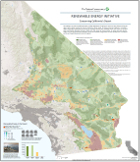
2010 | Terrestrial | Planning | Maps & Webmaps
Renewables in the Mojave Desert
This map and a series of others in the Conservancy's 2010 Mojave Desert Ecoregional Assessment have played a guiding role in siting—and mitigating the impacts of—renewable…
2010 | Terrestrial | Planning | Publications & Reports
Mojave Desert Ecoregional Assessment
John M. Randall, Sophie S. Parker, James Moore, Brian Cohen, Laura Crane, Bill Christian, Dick Cameron, Jason B. Mackenzie, Kirk Klausmeyer, Scott Morrison
Regional conservation planning is critical to inform land and resource use decisions. The Mojave Desert Ecoregional Assessment represents an important advance in such planning, because of how its…
2010 | Terrestrial | Planning | Publications & Reports
Southern Sierra Partnership Framework
Susan Antenen , Dick Cameron, EJ Remson, Jason MacKenzie, Jim Gaither, Sophie Parker, Zach Principe, with Southern Sierra Partnership
This collaborative conservation assessment, characterizes the biodiversity, ecosystem services, ownerships, and land uses in the Southern Sierra and Tehachapi Mountains, and assesses threats to…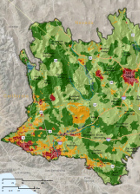
2010 | Terrestrial | Planning | Data
Mojave Desert Ecoregional Assessment data
This dataset is a product of the Mojave Desert Ecoregional Assessment and characterizes the distribution of biodiversity conservation values and land disturbance to help inform regional land-use and…
2010 | Terrestrial | Science | Publications & Reports
Interfacing models of wildlife habitat and human development to predict the future distribution of puma habitat
CL Burdett, KR Crooks, DM Theobald, KR Wilson, EE Boydston, LM Lyren, RN Fisher, TW Vickers, SA Morrison, WM Boyce
Long-term studies of animal movement can generate data that allow for robust modeling of habitat use by the species. This study characterizes and maps the distribution of habitat for mountain lions in…