Technology is enabling conservation scientists to collect and analyze data with an efficiency unimagined just decades ago. Satellite and drone-based remote sensing allow rapid mapping and monitoring of environmental conditions; networked sensors such as camera traps and flow meters provide real-time data about the health and potential threats to important resources.
Data are fundamental to making science-based conservation decisions. By modernizing environmental data capture and analysis and streamlining the delivery of usable information to decision makers, we can unlock new opportunities for transformative change in resource management.
The Conservancy’s team of designers, engineers, and data scientists are continually applying new applications of technology to increase the pace and scale of conservation in California – and beyond.
Science in Action
Terrestrial | Planning | Technology
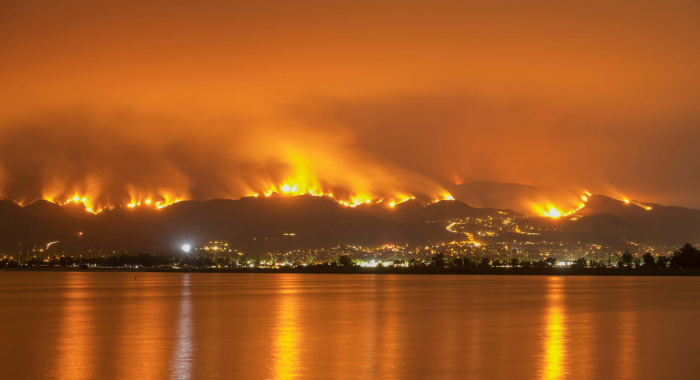
Wildfire and Communities
How can land protection and restoration help protect communities from wildfire?
Terrestrial | Marine | Science
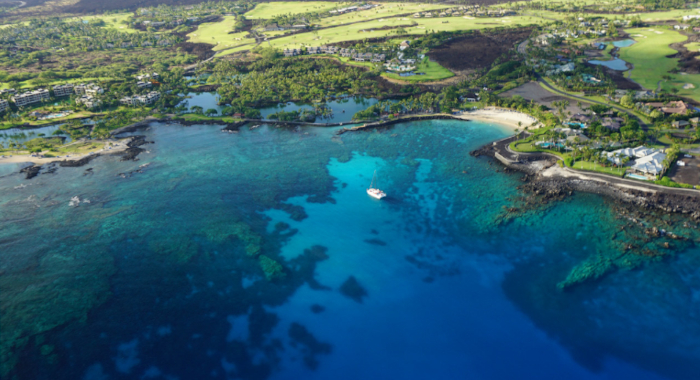
TNC and FEMA
How do we increase climate resilience in ways that work for people and nature?
Products
2016 | Terrestrial | Science | Publications & Reports
Inconsistent food safety pressures complicate environmental conservation for California produce growers
Patrick Baur, Laura Driscoll, Sasha Gennet, Daniel Karp
Since a deadly outbreak of pathogenic E. coli in California spinach in 2006, produce growers have been pressured to implement on-farm practices, such as native vegetation removal, in the name of food…
2016 | Terrestrial | Technology | Science | Publications & Reports
Integrating technologies for scalable ecology and conservation
David C. Marvin, Lian Pin Koh, Antony J. Lynam, Serge Wich, Andrew B. Davies, Ramesh Krishnamurthy, Emma Stokes, Ruth Starkey, Gregory P. Asner
Integration of multiple technologies greatly increases the spatial and temporal scales over which ecological patterns and processes can be studied, and threats to protected ecosystems can be…
2016 | Terrestrial | Planning | Technology | Science | Publications & Reports
Spatially explicit analysis of field inventories for national forest carbon monitoring
David C. Marvin, Gregory P. Asner
Policies that incentivize forest conservation by monetizing forest carbon ultimately depend on the accuracy of carbon stock estimates. Often, these estimates are based on field inventory sampling. In…
2016 | Freshwater | Terrestrial | Technology | Science | Publications & Reports
Pop-up wetland habitats benefit migrating birds and farmers
Christopher J. McColl, Katie Andrews, Mark Reynolds, Gregory H. Golet
In response to the decline of wetland habitats for migrating and wintering water birds in California, the Conservancy developed a program called BirdReturns that creates “pop-up”…
2016 | Terrestrial | Science | Publications & Reports
Agricultural practices for food safety threaten pest control services for fresh produce
Daniel S. Karp, Rebekah Moses, Sasha Gennet, Matthew S. Jones, Shimat Joseph, Leithen K. M'Gonigle, Lauren C. Ponisio, William E. Snyder, Claire Kremen
Food safety concerns have led to pressure on farmers to simplify their farms and landscapes, rather than diversify them. This study demonstrates that two practices – elimination of…
2016 | Terrestrial | Publications & Reports
Field-scale habitat complexity enhances avian conservation and avian-mediated pest-control services in an intensive agricultural crop
Sara M. Kross, T. Rodd Kelsey, Chris J. McColl, Jason M. Townsend
Globally, loss of biodiversity and impacts to natural services and human health have been driven to a significant degree by loss of natural habitats due to agricultural land conversion and management…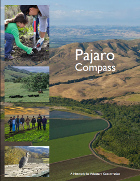
2016 | Terrestrial | Planning | Publications & Reports
Pajaro Compass
A Network for Voluntary Conservation
The Pajaro Compass—with its interactive maps and tools—supports a group of over 50 stakeholders representing conservation, agriculture, transportation, government and community…
2016 | Freshwater | Terrestrial | Planning | Publications & Reports
Future land-use related water demand in California
Tamara S Wilson, Benjamin M Sleeter, D Richard Cameron
This publication discusses how land use changes in Mediterranean California will drive changes in water use between urban uses and annual vs. perennial crops. The authors used a state-and-transition…
2016 | Terrestrial | Science | Publications & Reports
Contemporary Drought and Future Effects of Climate Change on the Endangered Blunt-Nosed Leopard Lizard, Gambelia sila
Michael F. Westphal, Joseph A. E. Stewart, Erin N. Tennant, H. Scott Butterfield, Barry Sinervo
This paper documents the negative effects of the 2012-2014 drought—the most severe multi-year drought in southwestern North America in the past 1,200 years—on the endangered blunt-nosed…
2016 | Marine | Publications & Reports
Marine and Coastal Impacts of Ocean Desalination in California
Szeptycki, L., E. Hartge, N. Ajami, A. Erickson, W. N. Heady, L. LaFeir, B. Meister, L. Verdone, J.R. Koseff
The drought in California rekindled interest in ocean desalination as a new and reliable water supply option; yet desalination is expensive, energy intensive, potentially emits greenhouse gases,…
2016 | Terrestrial | Science | Publications & Reports
Adaptive divergence despite strong genetic drift: genomic analysis of the evolutionary mechanisms causing genetic differentiation in the island fox
Funk, W.C., R.E. Lovich, P.A. Hohenlohe, C.A. Hofman, S.A. Morrison, T.S. Sillett, C.K. Ghalambor, J.E. Maldonado, T.C. Rick, M.D. Day, T.J. Coonan, K.R. Crooks, A. Dillon, D.K. Garcelon, J.L. King, L.M. Lyren, E.E. Boydston, N. Gould , W.F. Andelt
The genomics revolution provides powerful tools for understanding evolution and advancing conservation. This study applies genomics techniques to examine the evolutionary mechanisms underpinning…
2016 | Terrestrial | Science | Publications & Reports
Context‐dependent seed dispersal by a scatter‐hoarding corvid
M.B. Pesendorfer, T.S. Sillett, S.A. Morrison, A.C. Kamil
Foraging behavior may be influenced by a variety of factors, including food abundance and competitor density. This study examines how such factors affect the seed caching behavior of the Island…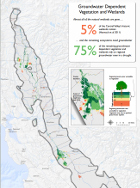
2016 | Freshwater | Maps & Webmaps
How and Where Nature Uses Groundwater
Kirk Klausmeyer, Jeanette Howard, Sandi Matsumoto, Sally Liu, Melissa Rohde
Groundwater is essential to the health and viability of plants, animals and ecosystems. Many tree species, like willows and cottonwoods, rely on groundwater to survive seasonal and annual dry spells.…
2016 | Terrestrial | Science | Blogs
Unraveling the Mystery of the Western Sycamores that Weren’t
Cara Byington, Greg Golet
2016 | Terrestrial | Science | Publications & Reports
Oren Pollak Memorial Research Fund - 2016 Annual Report
The Oren Pollak Memorial Research Fund provides student researchers with the funds necessary to pursue their studies and complete important research in grassland science. The Fund was…
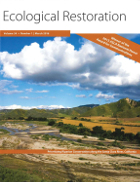
2016 | Terrestrial | Publications & Reports
Prioritizing Riparian Conservation: A Methodology Developed for the Santa Clara River, California
Sophie S. Parker, Lily N. Verdone, E.J. Remson, Brian S. Cohen
This study addresses a basic problem shared by many riparian conservation projects: parcelization. Having dozens or hundreds of owners along a river can make conserving riparian ecosystems a difficult…