
There are many and increasing threats to biodiversity. To protect the plants and animals that share our world, we need to understand what they need to survive – and ideally, thrive – in a warming, more crowded world. And we need to better understand how meeting those needs can align with other societal values.
To do that, our scientists conduct ecological research to elucidate conservation problems, test hypotheses and solutions, and monitor results. We collaborate with the scientific community to inform and review our work, and share our findings with scientists and conservation practitioners around the world.
Science in Action
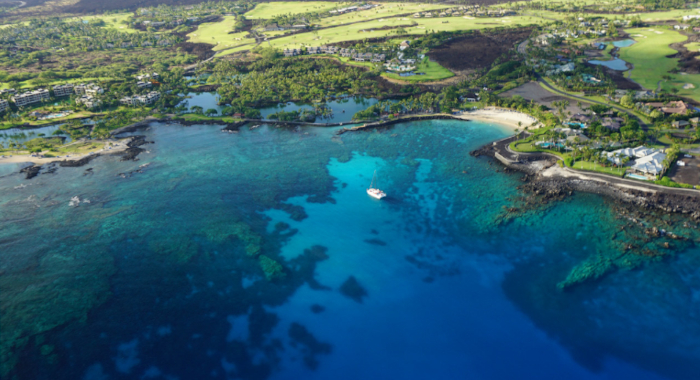
Terrestrial | Marine | Science
TNC and FEMA
How do we increase climate resilience in ways that work for people and nature?
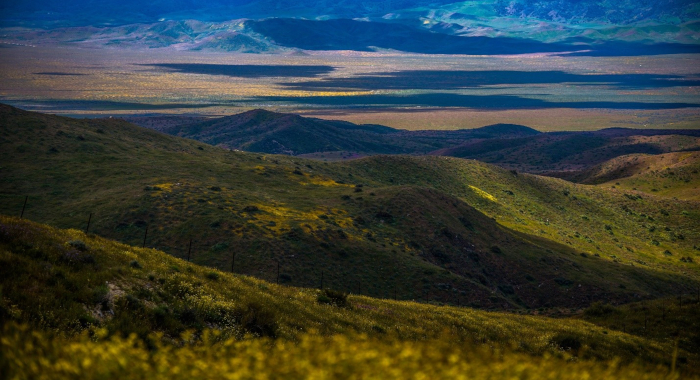
Freshwater | Terrestrial | Science
Rewilding the San Joaquin Valley
40 years of science sets the course for the largest recovery of species in U.S. history
2015 | Terrestrial | Science | Publications & Reports
Islands within an island: Repeated adaptive divergence in a single population
Langin, K.M., T.S. Sillett , W.C. Funk, S.A. Morrison, M.A. Desrosiers, C.K. Ghalambor
Islands are renowned laboratories for discovery into natural selection. This study looked at “islands” of habitat within a single island and remarkably found that the Island Scrub-Jay…
2015 | Terrestrial | Science | Publications & Reports
Mitochondrial genomes suggest rapid evolution of dwarf California Channel Islands foxes (Urocyon littoralis)
Hofman, C.A., T. C. Rick, M. T. R. Hawkins, W. C. Funk, K. Ralls, C. L. Boser, P. W. Collins, T. J. Coonan, J. L. King, S.A. Morrison, S. D. Newsome, T. S. Sillett, R. C. Fleischer, J. E. Maldonado
Genomics techniques provide powerful means of understanding evolutionary history. This paper examines the evolution of the island fox, which occurs on six of the California Channel Islands. Insights…
2015 | Freshwater | Terrestrial | Marine | Planning | Science | Publications & Reports
Recommendations for improving recovery criteria under the US Endangered Species Act
Doak, D.F., G.K. Himes Boor, V.J. Bakker, W.F. Morris, A. Louthan, S.A. Morrison, A. Stanley, L. Crowder
One of the key components of a recovery plan for a threatened or endangered species in the United States is the set of recovery criteria that will be used to evaluate progress in abating the threats…
2015 | Terrestrial | Science | Publications & Reports
Floral visitation by the Argentine ant reduces bee visitation and plant seed set
Cause Hanna, Ida Naughton, Christina Boser, Ruben Alarcón, Keng-Lou, James Hung, David Holway
Floral visitation by ants can compromise plant reproduction in situations where ants interfere with more effective pollinators. This paper documents how Argentine ants on Santa Cruz Island in…
2014 | Terrestrial | Science | Blogs
Can We Grow Safe Produce and Conserve Nature at the Same Time?
Daniel Karp, Sasha Gennet, Rodd Kelsey
2014 | Freshwater | Terrestrial | Marine | Planning | Science | Publications & Reports
A framework for conservation in a human-dominated world
Recognition of the magnitude of human impacts on the planet and the urgent need to increase the pace and scale of conservation has led many conservation organizations to emphasize conservation for…
2014 | Freshwater | Marine | Science | Publications & Reports
Nursery Functions of U.S. West Coast Estuaries: The State of Knowledge for Juveniles of Focal Invertebrate and Fish Species
Brent B. Hughes, Matthew D. Levey, Jennifer A. Brown, Monique C. Fountain, Aaron B. Carlisle, Steven Y. Litvin, Correigh M. Greene, Walter N. Heady, Mary G. Gleason
Estuaries support significant biodiversity and important ecosystem functions such as providing rearing habitat for juvenile fish and invertebrates. This report synthesizes the scientific…
2014 | Terrestrial | Science | Publications & Reports
Fractured genetic connectivity threatens a southern California puma (Puma concolor) population
H.B. Ernest, T.W. Vickers, S.A. Morrison, M.R. Buchalski, W.M. Boyce
Highly fragmented landscapes can pose myriad threats to wide-ranging species like mountain lions. Coastal southern California has long been the focus of research into demographics, genetics, and…
2014 | Terrestrial | Technology | Science | Publications & Reports
A multi-scale distribution model for non-equilibrium populations suggests resource limitation in an endangered rodent
Tim Bean, Bob Stafford, Scott Butterfield, Justin Brashares
This paper presents a multi-step approach to estimate the realized and potential distribution of the endangered giant kangaroo rat. The authors estimate the potential distribution by modeling…
2014 | Freshwater | Science | Publications & Reports
Low-Cost Restoration Techniques for Rapidly Increasing Wood Cover in Coastal Coho Salmon Streams
Jennifer K. Carah, Christopher C. Blencowe, David W. Wright
Coho salmon in California are critically imperiled so there is strong impetus to achieve as much habitat restoration as possible in priority watersheds quickly and with limited resources. This paper…
2014 | Terrestrial | Science | Publications & Reports
Passive recovery of vegetation after herbivore eradication on Santa Cruz Island, California
Beltran, R.S., N. Kreidler, D.H. Van Vuren, S.A. Morrison, E.S. Zavaleta, K. Newton, B.R. Tershy, D.A. Croll
Introduced predators and herbivores can have dramatic ecological effects on island ecosystems; their eradication can produce similarly profound ecological responses. This paper analyzes data from…
2014 | Freshwater | Terrestrial | Technology | Science | Blogs
A Renter’s Market: BirdReturns Offers Innovative Conservation
Eric Hallstein, Matt Miller
2014 | Terrestrial | Science | Publications & Reports
Ecological change on California's Channel Islands from the Pleistocene to the Anthropocene
Rick, T.C, T.S. Sillett, C.K. Ghalambor, C.A. Hofman, K. Ralls, R.S. Anderson, C.L. Boser, T.J. Braje, D.R. Cayan, R.T. Chesser, P.W. Collins, J.M. Erlandson, K.R. Faulkner, R. Fleischer, W.C. Funk, R. Galipeau, A. Huston, J. King, L. Laughrin, J. Maldonado, K. McEachern, D.R. Muhs, S.D. Newsome, L. Reeder-Myers, C. Still, S.A. Morrison
Understanding the deep history of places and resources, and the interplay between natural and cultural histories, can be critical to science-based conservation management. This paper explores the case…
2014 | Terrestrial | Technology | Science | Publications & Reports
Species distribution models of an endangered rodent offer conflicting measures of habitat quality at multiple scales
Tim Bean, Laura Prugh, Bob Stafford, Scott Butterfield, Mike Westphal, Justin Brashares
In this study, the authors developed a suite of species distribution models (SDMs) for the endangered giant kangaroo rat using the machine-learning method Maxent. They compared these models with three…
2014 | Terrestrial | Science | Publications & Reports
Partitioning the sources of demographic variation reveals density‐dependent nest predation in an island bird populationv
H.R. Sofaer, T.S. Sillett, K.M. Langin, S.A. Morrison, C.K. Ghalambor
The density of birds in their breeding areas can affect reproductive success in myriad ways – and it is often difficult to distinguish which factors are more influential. For example, areas that…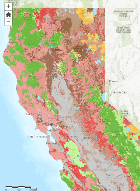
2014 | Terrestrial | Planning | Science | Maps & Webmaps
Actions Likely to Increase Plant and Animal Resilience to Climate Change
This webmap provides regional climate projections with information about topography, coastal proximity and level of habitat fragmentation to help land managers identify concrete conservation…
2014 | Terrestrial | Science | Publications & Reports
A bird in our hand: weighing uncertainty about the past against uncertainty about the future in Channel Islands National Park
When should managers intervene if threats from climate change are likely but there is uncertainty about when those threats would actually jeopardize a conservation value? This paper presents a case…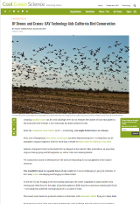
2014 | Terrestrial | Science | Publications & Reports
Reintroduction of historically extirpated taxa on the California Channel Islands
S.A. Morrison, K.A. Parker, P.W. Collins, W.C. Funk, T.S. Sillett
Pest eradication as a means to restore island ecosystems may come too late for populations that have already been driven extinct. Over decades, the California islands have been the focus of numerous…
2014 | Terrestrial | Science | Publications & Reports
Argentine ant management in conservation areas: results of a pilot study
CL Boser, C Hanna, KR Faulkner, C Cory, JM Randall, SA Morrison
Argentine ants are a highly aggressive and impactful non-native species introduced to California and around the world, impacting ecologically sensitive areas, commercial industries and residential…