Search Results for: oak

2026 | Terrestrial | Planning | Technology | Science | Publications & Reports
Integrating multi-decadal satellite imagery and species distribution models for conservation planning in oak woodlands
M. Brooke Rose, Janet Franklin, H. Scott Butterfield, Paige Rohwer, Amelie Beck, Maria C. Viteri, Jeanette K. Howard, Zachary Principe, Andrea Craig, Daniel Sousa
Oaks are a foundational species, including across TNC preserves like Dye Creek and Randall. They support thousands of organisms. Drought, catastrophic wildfire, land conversion, and climate change are threatening the survival of these ecosystems, and therefore the potential ecological integrity of…
2026 | Terrestrial | Technology | Science | Publications & Reports
Genomic Data Clarify Identities and Origins of Purported Hybrids and Anomalous Oaks on the Channel Islands of California
Ryan Buck, John Knapp, H. Scott Butterfield, Jeanette Howard, Victoria Sork
Hybridization is common among plant taxa and can lead to adaptive introgression, range expansion, and even island colonization. Patterns of hybridization in natural and disturbed populations can reflect a species' evolutionary history and elucidate patterns of human influence. Here is we use…
2026 | Terrestrial | Technology | Science | Publications & Reports
Comparison of conservation strategies for California Channel Island Oak (Quercus tomentella) using climate suitability predicted from genomic data
Alayna Mead, Sorel Fitz-Gibbon, John Knapp, Victoria L. Sork
Oaks are a foundational species, supporting thousands of other species including California’s Channel Islands. Climate change threatens the persistence of oak species across the Channel Islands, including on The Nature Conservancy’s Santa Cruz Island Preserve. In this study, the authors…
2026 | Terrestrial | Technology | Science | Publications & Reports
Landscape genomic analyses of Quercus agrifolia Née predict patterns of adaptedness to future climate and provide guidance for conservation
Ryan C. Buck, H. Scott Butterfield, Elizabeth Hiroyasu, Jeanette Howard, John Knapp, Zachary Principe, Victoria L. Sork
Coast live oaks serve important foundational roles across California oak woodland ecosystems, including across The Nature Conservancy’s grassland and oak woodland preserves. In the most recent drought, there was significant dieback, and there continue to be challenges associated with…
2026 | Terrestrial | Technology | Science | Publications & Reports
Applying both landscape genomic and ecological niche model predictions to inform conservation strategies of a California foundational oak species
Ryan C. Buck, H. Scott Butterfield, Elizabeth H. T. Hiroyasu, , Jeanette Howard, Zachary Principe, M. Brooke Rose, Victoria L. Sork
Oaks are a foundational species across the globe, supporting the survival of thousands of plant and animal species. In the last drought in California, there was significant oak dieback and, coupled with reduced recruitment and regeneration and continued climate-induced stress there was real concern…
2024 | Terrestrial | Marine | Science | Publications & Reports
Spatial Patterns of Vegetation Change in a Fire-Suppressed Coastal California Landscape
Lucy Genua, Brad Anderson, Meghan Bowen, Genelle Ives, Owen Liu, Thomas Paschos, H. Scott Butterfield, Kelly Easterday, Mark Reynolds, James H. Thorne
In this paper, the authors used historical vegetation data, from both aerial photographs and field transects, to assess the change in major vegetation types at the Dangermond Preserve over the last approximately 80 years. They found that as grazing and fire have decreased across this landscape,…
2022 | Terrestrial | Technology | Science | Publications & Reports
Predictive ecological land classification from multi-decadal satellite imagery
Daniel Sousa, Frank W. Davis, Kelly Easterday, Mark Reynolds, Laura Riege, H. Scott Butterfield, Moses Katkowski
This paper details a first of its kind approach to land classification, using random forests and multivariate regression trees and historical Landsat satellite imagery to map and then assess changes in oak canopies at the Jack and Laura Dangermond Preserve. Using this…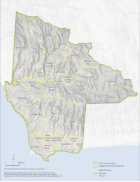
2020 | Terrestrial | Planning | Technology | Science | Publications & Reports
Jack and Laura Dangermond Preserve Rangeland Management Plan
Butterfield, H.S., M. Katkowski, J. Cota, O. Sage, C. Sage, K. Easterday, D. Zeleke, L. Riege, S. Gennet, K. Lin, B. Leahy, M. Bell, M. Reynolds
Cattle grazing is the dominant land management tool TNC has to manage biodiversity and reduce the threat of catastrophic wildfire at the TNC's Jack and Laura Dangermond Preserve. This Rangeland Management Plan, intended to guide rangeland management through 2025, details the adaptive…
2019 | Freshwater | Science | Publications & Reports
A Transdisciplinary Approach to Characterize Hydrological Controls on Groundwater-Dependent Ecosystem Health
Melissa M. Rohde, Sara B. Sweet, Craig Ulrich, Jeanette Howard
Groundwater plays an essential role in supporting freshwater species, riparian habitats, and migratory birds. These ecological communities, commonly referred to as groundwater-dependent ecosystems (GDEs), can suffer undesirable impacts from unsustainable pumping practices. This study…
2018 | Freshwater | Terrestrial | Planning | Science | Publications & Reports
Water Supply and Habitat Resiliency for a Future Los Angeles River: Site-Specific Natural Enhancement Opportunities Informed by River Flow and Watershed-Wide Action
Brian Cohen, Shona Ganguly, Sophie Parker, John Randall, Jill Sourial, and Lara Weatherly of The Nature Conservancy, Land IQ, Natural History Museum Los Angeles County, WRC Consulting Services Inc., Travis Longcore, University of Southern California, Connective Issue, Inc.
As a basic principle of ecological systems, a watershed’s hydrology determines the flow characteristics of its river system. These flows define what the biological characteristics of that river will be, which in turn determine what kinds of habitat enhancement projects will succeed at…
2018 | Terrestrial | Science | Publications & Reports
Oak habitat recovery on California's largest islands: Scenarios for the role of corvid seed dispersal
Mario B. Pesendorfer, Christopher M. Baker, Martin Stringer, Eve McDonald‐Madden, Michael Bode, A. Kathryn McEachern, Scott A. Morrison, T. Scott Sillett
A key aim of conservation is to restore ecological processes to degraded ecosystems. This study models how reintroducing an ecosystem engineer – the island scrub-jay, which is a highly efficient seed disperser – to a degraded island ecosystem could accelerate the recovery of its oak…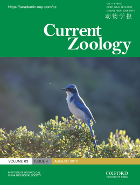
2017 | Terrestrial | Science | Publications & Reports
Spatially biased dispersal of acorns by a scatter-hoarding corvid may accelerate passive restoration of oak habitat on California’s largest island
Mario B. Pesendorfer, T. Scott Sillett, Scott A. Morrison
An individual jay can cache thousands of oak seeds per year, and in so doing provide oaks a means to disperse long distances. This ecological process can be especially important in restoration of degraded habitats – like Santa Cruz Island, CA, which experienced over 150 years of severe…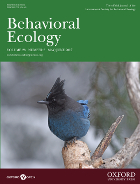
2017 | Terrestrial | Science | Publications & Reports
Bill morphology and neutral genetic structure both predict variation in acoustic signals within a bird population
Kathryn M. Langin, T. Scott Sillett, Scott A. Morrison, Cameron K. Ghalambor
Island Scrub-Jays, a species restricted to 250 km2 Santa Cruz Island, CA, have different bill forms depending on whether they occupy oak or pine dominated habitat, a pattern that may be associated with foraging efficiency. This paper shows how vocalizations important for pair bonding also differ…
2017 | Terrestrial | Science | Publications & Reports
Oren Pollak Memorial Research Fund - 2017 Annual Report
The Oren Pollak Memorial Research Fund was established in 2000 in memory of Dr. Oren Pollak, a leading grassland ecologist and restoration pioneer, as well as an ardent champion and mentor for grassland ecology students. As The Nature Conservancy’s lead ecologist in California in the early…
2016 | Terrestrial | Science | Publications & Reports
Context‐dependent seed dispersal by a scatter‐hoarding corvid
M.B. Pesendorfer, T.S. Sillett, S.A. Morrison, A.C. Kamil
Foraging behavior may be influenced by a variety of factors, including food abundance and competitor density. This study examines how such factors affect the seed caching behavior of the Island Scrub-Jay, and in turn how those contextual factors may affect the resulting distribution of seeds.
2016 | Terrestrial | Science | Publications & Reports
Scatter-hoarding corvids as seed dispersers for oaks and pines: a review of a widely distributed mutualism and its utility to habitat restoration
M.B. Pesendorfer, T.S. Sillett, W.D. Koenig, S.A. Morrison
Many corvids are renowned as “ecosystem engineers” because they facilitate the long-distance seed dispersal of keystone tree species like oaks. This paper reviews research into various aspects of the relationship between these birds and these trees, and discusses how the relationship can…
2015 | Terrestrial | Science | Publications & Reports
Islands within an island: Repeated adaptive divergence in a single population
Langin, K.M., T.S. Sillett , W.C. Funk, S.A. Morrison, M.A. Desrosiers, C.K. Ghalambor
Islands are renowned laboratories for discovery into natural selection. This study looked at “islands” of habitat within a single island and remarkably found that the Island Scrub-Jay – notably, a highly vagile species – had different shaped bills depending on whether it…
2014 | Terrestrial | Planning | Publications & Reports
Demography linked to climate change projections in an ecoregional case study
B. C. Mclaughlin, C. N. Morozumi, J. MacKenzie, A. Cole, S. Gennet
Anticipating how species will move as the climate changes is a fundamental concern in 21st century conservation. This study modeled potential responses of blue oak (Quercus douglasii), an endemic, flagship species in California, to future climate and then validated the results in the field.…
2014 | Terrestrial | Science | Publications & Reports
Stand structure and acorn production of the island scrub oak (Quercus pacifica)
Mario B. Pesendorfer, Kathryn M. Langin, Brian Cohen, Zachary Principe, Scott A. Morrison, T. Scott Sillett
Acorns are an important food resource for many species that occupy oak habitats. Patterns of acorn abundance across time and space, however, are often difficult to characterize. This paper describes observed patterns associated with a dominant and keystone species of oak on Santa Cruz Island, CA,…
2010 | Terrestrial | Science | Publications & Reports
Interfacing models of wildlife habitat and human development to predict the future distribution of puma habitat
CL Burdett, KR Crooks, DM Theobald, KR Wilson, EE Boydston, LM Lyren, RN Fisher, TW Vickers, SA Morrison, WM Boyce
Long-term studies of animal movement can generate data that allow for robust modeling of habitat use by the species. This study characterizes and maps the distribution of habitat for mountain lions in coastal southern California, and combines those data with models of projected urban growth in the…