Almost half of the world’s human population lives in coastal areas, and associated coastal development has significantly degraded or destroyed many coastal ecosystems. Burgeoning human populations and rising sea levels only further constrain the availability of habitat that coastal species depend on.
California’s 1,100 mile coast has more than 200 threatened, endangered or rare species living in coastal habitats. There are hundreds of coastal estuaries that provide critical rearing habitat for marine species, and are also important for recreation, water filtration, and carbon sequestration.
Only 10 percent of California’s historic coastal wetlands remain. Without intervention, we are at risk of losing 40 percent of our remaining coastal wetlands to sea level rise over the coming decades. Conservancy scientists are working to reverse these trends.
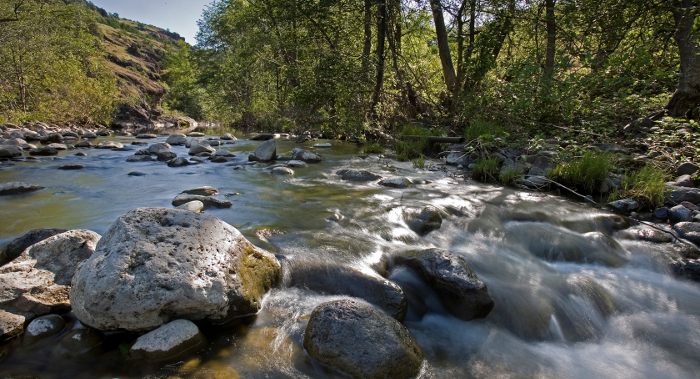
Freshwater Systems
California is one of the most hydrologically altered landscapes in the world. As water becomes…>>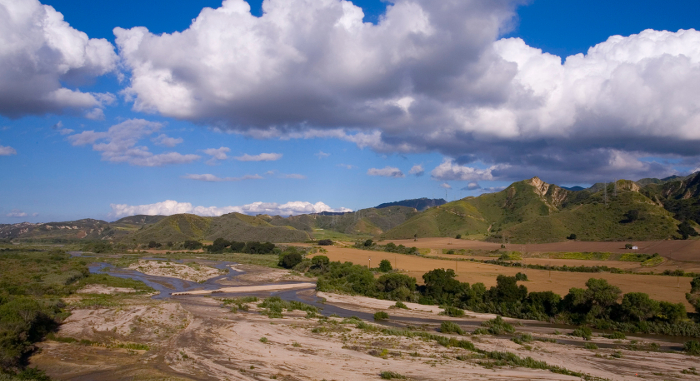
Groundwater
In a normal year, groundwater accounts for 40 percent of California’s water supply. That…>>
Surface Flows
Californians have fundamentally altered many of the state’s rivers and streams with dams,…>>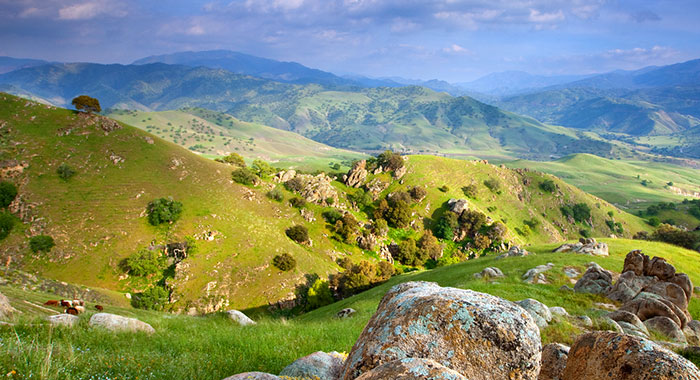
Terrestrial Systems
In California, a day’s drive can take a visitor from record-setting desert heat to glaciated…>>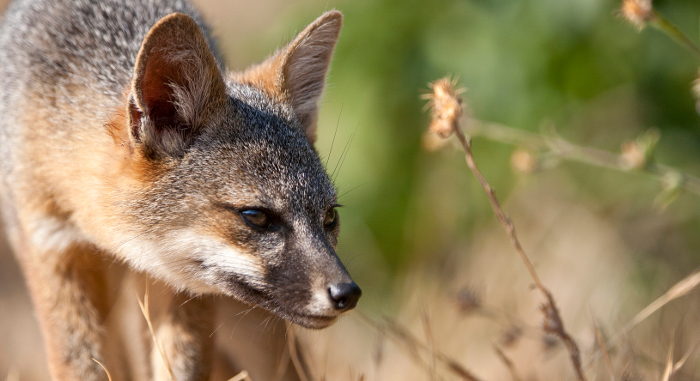
Wildlands
Nearly half of California is protected in some land status that prevents most kinds of intensive…>>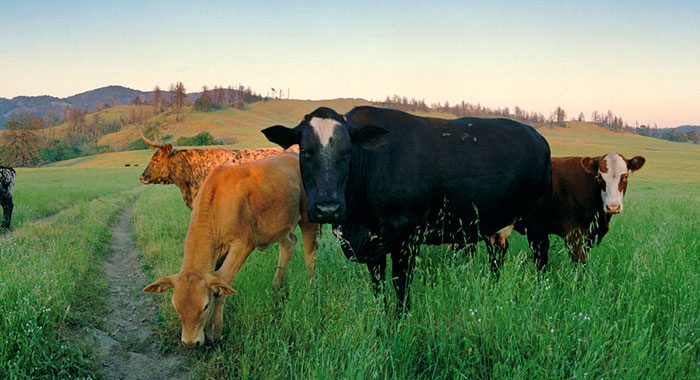
Harvested Landscapes
A third of California is privately-owned forestland, woodland or grassland. From redwood forests on…>>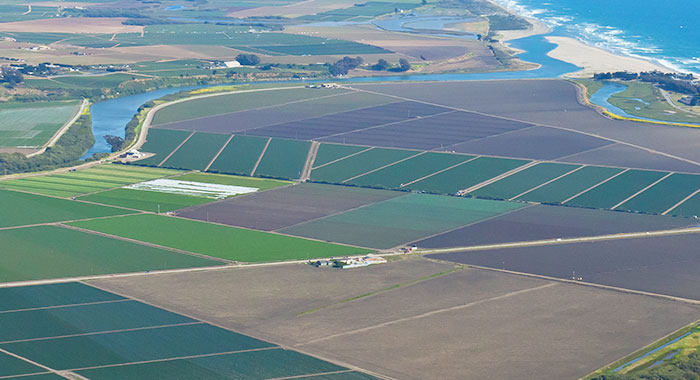
Cultivated Landscapes
California is the leading agricultural state in the country and it’s agriculture generates…>>
Urban Areas and Infrastructure
With California’s population on track to reach 50 million people, the demand for energy,…>>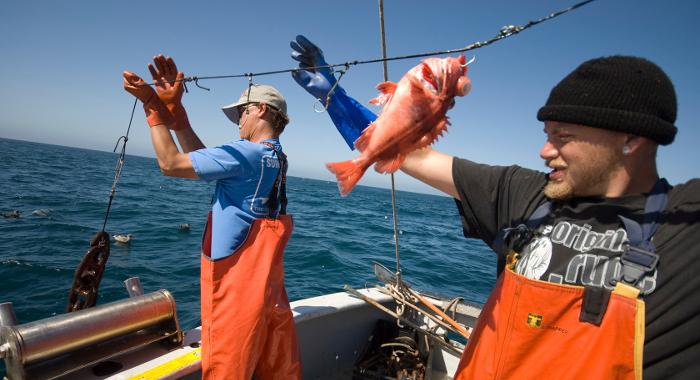
Fisheries
Wild capture fisheries supply food and jobs for hundreds of millions of people across the globe. Yet…>>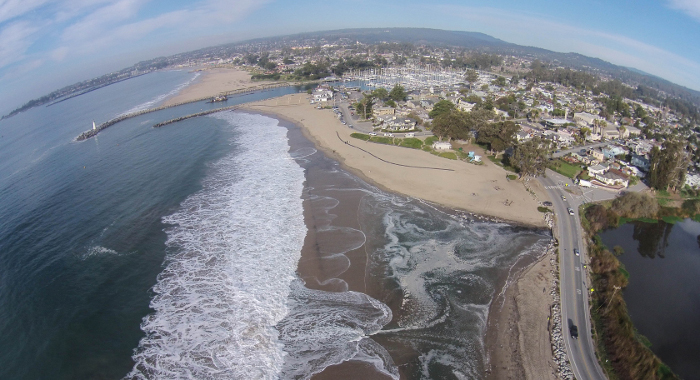
Coastal Conservation
Almost half of the world’s human population lives in coastal areas, and associated coastal…>>Science in Action
Terrestrial | Planning | Technology
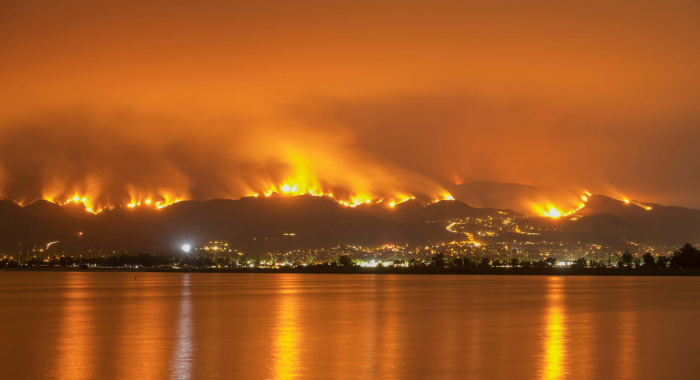
Wildfire and Communities
How can land protection and restoration help protect communities from wildfire?
Terrestrial | Marine | Science
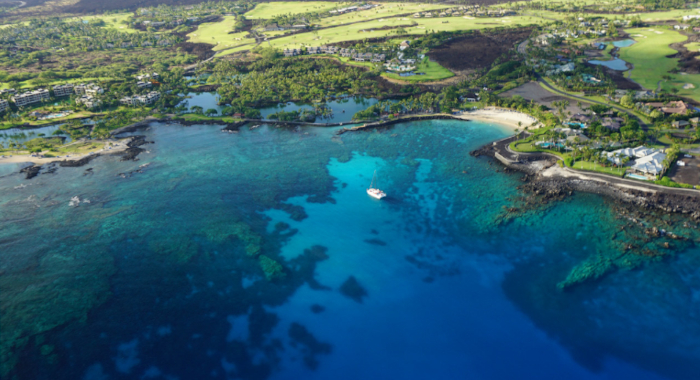
TNC and FEMA
How do we increase climate resilience in ways that work for people and nature?
2010 | Marine | Planning | Publications & Reports
Science-based and stakeholder-driven marine protected area network planning: A successful case study from north central California
Mary Gleason, Scott McCreary, Melissa Miller-Henson, John Ugoretz, Evan Fox, Matt Merrifield, Will McClintock, Paulo Serpa, Kathryn Hoffman
This paper describes the planning process for California's Marine Life Protection Act (MLPA) in north central California. The process represents a case study in the design of a regional component…
2009 | Freshwater | Planning | Publications & Reports
California’s Freshwater Biodiversity in a Continental Context
Howard, J, C. Revenga
Worldwide, freshwater species and habitats are, on average, more imperiled than their terrestrial or marine counterparts. Despite concerns over the health of the world’s freshwater species and…
2009 | Marine | Publications & Reports
Are we missing the boat? Collaborative solutions for North American fish wars
Mary Gleason, Chuck Cook, Michael Bell, Erika Feller
This editorial highlights the polarization and lack of innovation in U.S. fisheries management, using the West Coast groundfish fishery as an example. The authores focus on the need for new…
2009 | Terrestrial | Science | Publications & Reports
Fire on Guadalupe Island reveals some old wounds – and new opportunity
Oberbauer, T., L. Luna Mendoza, N. Citlali Oliveres, L. Barbosa Deveze, I. Granillo Duarten, S.A. Morrison
Guadalupe Island in Mexico is undergoing a dramatic ecological recovery following the eradication of feral goats. Unfortunately, that eradication came too late for some species and ecosystems, and…
2009 | Terrestrial | Science | Publications & Reports
Reproductive consequences of an extreme drought for orange-crowned warblers on Santa Catalina and Santa Cruz Islands
Kathryn M. Langin, T. Scott Sillett, Jongmin Yoon, Helen R. Sofaer, Scott A. Morrison, Cameron K. Ghalambor
Island archipelagos can provide useful opportunities for comparative studies in ecology. For example, breeding ecology of a songbird was studied on two of the California Channel Islands, which share…
2009 | Terrestrial | Planning | Publications & Reports
Threats and biodiversity in the mediterranean biome
E.C. Underwood, J.H. Viers, K.R. Klausmeyer, R.L. Cox, M. R. Shaw
The mediterranean biome is one of the rarest terrestrial ecosystem types on Earth, restricted to only 2% of the world’s land surface. Encompassing portions of southern Australia, central Chile,…
2009 | Terrestrial | Science | Publications & Reports
Incorporating ecological drivers and uncertainty into a demographic population viability analysis for the island fox
Victoria J. Bakker, Daniel F. Doak, Gary W. Roemer, David K. Garcelon, Timothy J. Coonan, Scott A. Morrison, Colleen Lynch, Katherine Ralls, Rebecca Shaw
Population models can be a critical tool in managing recovery of endangered species. This paper presents an analysis that became the foundation of recovery planning and tracking for the endangered…
2009 | Terrestrial | Planning | Publications & Reports
Modeling multiple ecosystem services, biodiversity conservation, commodity production, and tradeoffs at landscape scales
Erik Nelson, Guillermo Mendoza, James Regetz, Stephen Polasky, Heather Tallis, D. Richard Cameron, Kai MA Chan, Gretchen C. Daily, Joshua Goldstein, Peter M. Kareiva, Eric Lonsdorf, Robin Naidoo, Taylor H. Ricketts, M. Rebecca Shaw
Humans benefit from the goods and services provided by natural ecosystems like water filtration, carbon storage, and recreational opportunities to name a few. Assigning economic value to these…
2009 | Terrestrial | Planning | Publications & Reports
Expanding the global network of protected areas to save the imperiled mediterranean biome
Underwood, E.C., K.R. Klausmeyer, R.L. Cox, S.M. Busby, S.A. Morrison, M.R.Shaw
Mediterranean habitats are among the rarest on Earth. Characterized by warm dry summers and cool wet winters, they are restricted to only 2% of the Earth’s land surface–portions of…
2008 | Terrestrial | Science | Publications & Reports
Quantifying eradication success: the removal of feral pigs from Santa Cruz Island, California
DSL Ramsey, J Parkes, SA Morrison
Populations at very low abundance can be very difficult to detect. Consequently, one of the biggest challenges of eradication projects is determining whether an inability to detect the species at the…
2008 | Terrestrial | Planning | Publications & Reports
Conserving connectivity: some lessons from mountain lions in southern California
Scott Morrison, Walter Boyce
Critical for biodiversity conservation is the retention of ecological connectivity in the landscape, so that wildlife—and the natural processes that sustain wildlife—can move around.…
2008 | Terrestrial | Technology | Science | Publications & Reports
One size does not fit all: the use of cattle grazing for grassland management at Carrizo Plain National Monument
Caroline Christian , Lawrence Saslaw, H. Scott Butterfield
To better understand the ecological role of cattle grazing in managing Carrizo Plain National Monument, we initiated a long-term study in 1997 designed to evaluate the effects of cattle grazing on…
2008 | Freshwater | Terrestrial | Science | Publications & Reports
Wildlife Response to Restoration on the Sacramento River
Golet G.H., T. Gardali, C. Howell, J. Hunt, R. Luster, B. Rainey, M. Roberts, H. Swagerty, N. Williams
Studies that assess the success of riparian restoration projects seldom focus on wildlife. More often, vegetation is studied, with the assumption that animal populations will recover once adequate…
2008 | Marine | Planning | Science | Publications & Reports
Establishing Resilient Marine Protected Area Networks–Making it Happen
Dan Laffoley, Alan T. White, Stacey Kilarski, Mary Gleason, Scott Smith, Ghislaine Llewellyn , Jon Day , Annie Hillary, Victoria Wedell, Daphine Pee
With government, agency and organizational partners, Conservancy scientists helped publish an IUCN guidebook to inspire conservation investment in global marine protection and provide a case study…
2007 | Terrestrial | Science | Publications & Reports
Reducing risk and enhancing efficiency in non-native vertebrate removal efforts on islands: a 25 year multi-taxa retrospective from Santa Cruz Island, CA
Eradication of invasive non-native species is often necessary to protect island ecosystems. Eradication efforts can nonetheless be risky investments. How they are planned and implemented can greatly…
2007 | Terrestrial | Science | Publications & Reports
Facing the dilemma at eradication’s end: uncertainty of absence and the Lazarus effect
Scott A. Morrison, Norman Macdonald, Kelvin Walker, Lynn Lozier, M Rebecca Shaw
One of the greatest challenges in pest eradication is knowing when it has been achieved. This paper discusses why that is challenging, and why it is so important to consider how that challenge will be…
2006 | Freshwater | Terrestrial | Marine | Publications & Reports
Designing and establishing conservation areas in the Baja California-Southern California border region
M.D. White , J.A. Stallcup, K. Comer, M.A. Vargas, J.M. Beltran Abaunza, F. Ochoa, S.A. Morrison
The California South Coast Ecoregion, a global biodiversity hotspot, is bisected by the US-Mexico border. Development near the border, ranging from urban sprawl to border security infrastructure,…
2006 | Freshwater | Terrestrial | Marine | Planning | Science | Publications & Reports
Where to draw the line: integrating feasibility into connectivity planning
Protecting, restoring, and enhancing habitat connectivity in already fragmented landscapes poses many challenges for conservationists. This essay discusses the importance of considering implementation…
2006 | Freshwater | Terrestrial | Science | Publications & Reports
Abundance Patterns of Landbirds in Restored and Remnant Riparian Forests on the Sacramento River, California, U.S.A.
Gardali T. , A.L. Holmes, S.L. Small, N. Nur, G.R. Geupel, G.H. Golet
Restoration efforts on the Sacramento River are focusing on revegetating the land with native plants and restoring natural river processes in an attempt to recover wildlife populations. To evaluate…
2006 | Freshwater | Terrestrial | Planning | Science | Publications & Reports
Assessing societal impacts when planning restoration on large alluvial rivers: A case study of the Sacramento River Project, CA
Golet G.H., M.D. Roberts , E.W. Larsen, R.A. Luster, R. Unger, G. Werner, G.G. White.
River restoration projects have the potential to influence many of the services that rivers provide to people, yet rarely is this studied in a comprehensive manner. This paper reports on a set of…