California is the leading agricultural state in the country and it’s agriculture generates more than $45 billion annually. About 10 million acres of the state is intensively cultivated land, using roughly 80 percent of the developed water supply. Only a small fraction of these lands are managed deliberately in ways that minimize impacts to nature and maximize the services that nature can provide back to the farm. This has come at a substantial price to nature and the future resilience of agriculture.
Maintaining a mix of natural areas along farm fields and along waterways can provide vital habitat and movement corridors for wildlife, as well as important services like pollination and pest control from native insects, erosion control, and improved water quality. Sustainable management of soils and crops themselves can further reduce the ecological footprint of the land use, and indeed provide habitat for some native species.
Conservancy scientists are investigating these co-benefits, to inform how policy and market incentives could promote food production practices that sustain nature as well as people.
Science in Action
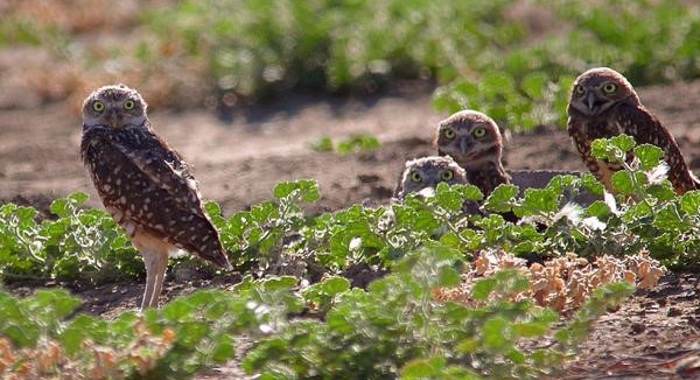
Terrestrial | Science
Wildlife Friendly Agriculture
Can we modify agricultural landscapes to enhance habitat for wildlife, in ways that also benefit the farm?
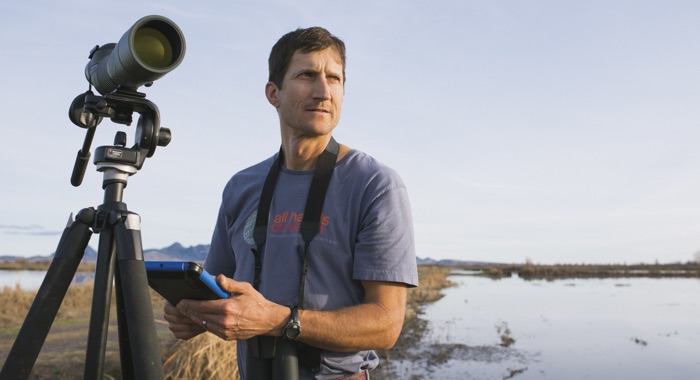
Freshwater | Terrestrial | Technology | Science
BirdReturns
How can we get water in the right place at the right time to help migrating birds?

2013 | Freshwater | Terrestrial | Planning | Science | Publications & Reports
Successes, Failures and Suggested Future Directions for Ecosystem Restoration of the Middle Sacramento River, CA
Golet G.H., D.L. Brown, M. Carlson, T. Gardali, A. Henderson, K.D. Holl, C.A. Howell, M. Holyoak, J. Hunt, G.M. Kondolf, E.W. Larsen, R.A. Luster, C. McClain, C. Nelson, S. Paine, W. Rainey, Z. Rubin, F. Shilling, J.G. Silveira, H. Swagerty, N.M. Williams, D.M. Wood
Large-scale ecosystem restoration projects seldom undergo comprehensive evaluation to determine project effectiveness. Consequently, there are missed opportunities for learning and strategy…
2013 | Terrestrial | Science | Publications & Reports
Vinecology: Pairing Wine with Nature
Joshua H. Viers, John N. Williams, Kimberly A. Nicholas, Olga Barbosa, Inge Kotzé, Liz Spence, Leanne B. Webb, Adina Merenlender, Mark Reynolds
As an essential component of food security, agricultural landscapes must play a role in conservation efforts because they occupy large areas of land, are adjacent to critical habitat, and both depend…
2013 | Terrestrial | Science | Publications & Reports
Farm practices for food safety: an emerging threat to floodplain and riparian ecosystem
Gennet, S., J. Howard, J. Langholz, K. Andrews, M.D. Reynolds, S.A. Morrison
This paper discusses the 2006 outbreak of toxic foodborne E. coli and its impact on wildlife. The authors explain how farming practices for food safety that target wildlife can damage ecosystems but…
2013 | Freshwater | Terrestrial | Science | Publications & Reports
Decline and Recovery of Small Mammals after Flooding: Implications for Pest Management and Floodplain Community Dynamics
Golet G.H., J. Hunt, D. Koenig
Floodplains often are managed both for agriculture and as habitat for native species. On the Sacramento River, farmers have expressed concern that natural areas may be sources of pests to adjoining…
2008 | Freshwater | Terrestrial | Science | Publications & Reports
Wildlife Response to Restoration on the Sacramento River
Golet G.H., T. Gardali, C. Howell, J. Hunt, R. Luster, B. Rainey, M. Roberts, H. Swagerty, N. Williams
Studies that assess the success of riparian restoration projects seldom focus on wildlife. More often, vegetation is studied, with the assumption that animal populations will recover once adequate…
2006 | Freshwater | Terrestrial | Planning | Science | Publications & Reports
Assessing societal impacts when planning restoration on large alluvial rivers: A case study of the Sacramento River Project, CA
Golet G.H., M.D. Roberts , E.W. Larsen, R.A. Luster, R. Unger, G. Werner, G.G. White.
River restoration projects have the potential to influence many of the services that rivers provide to people, yet rarely is this studied in a comprehensive manner. This paper reports on a set of…